


by Emma Smith
Do you know anyone who doesn’t carry a smartphone? Mobile phones are no longer just essential for staying in contact with family, friends, and business associates. They have become central to making payments, boarding airplanes, programming domestic appliances, unlocking smart locks, and attending events of all types.
The COVID-19 pandemic highlighted the importance of mobile devices and remote work took a leading role in commercial activities. Consequently, the future is now headed toward complete mobility, and security, both cyber and physical, is necessarily at the forefront of this revolution.
Thanks to digital identity credentials, mobile phones are increasingly central to storing documents from vaccine certificates to driver’s licenses, and more. Our smartphones will not only have a starring role in cybersecurity but will become irreplaceable for physical security needs as well.
Traditional keys, fobs, and keycards are all at risk of being copied or lost and they may even be borrowed without your knowledge. The most advanced of key cards or fobs still require some controls to verify who they are being used by. Access control systems that integrate the use of mobile phones, eliminate the need for fobs or key cards. Employees can use their smartphones and even authorized guests can have visitor’s credentials sent to them shortly before their appointment or visit.
Are Mobile Phones Secure Enough?
Personal smartphones are an entirely different story from traditional security methods thanks to new technology. Because of how advanced mobile phone security is, commercial enterprises may benefit from improved security by switching to a system that uses mobile phones.
Mobile phones can:
– Integrate Multi-Factor Authentication or biometrics for identity confirmation
– Furnish a unique identity credential to individual users or a digital badge
– Reduce the risk of theft or of the cloning of identity credentials
– Use encryption for communication between smartphones and readers
– Be integrated into all security systems on a single cloud-based platform
– Receive and send alerts should security or safety warrant it
What Is a Mobile Credential?
A mobile credential is the same as a key card or fob, but it’s located within your mobile phone. Systems that use mobile credentials will require employees or visitors to install an app on their smartphones and then produce or scan a QR code or open a key link. When near the access reader, they will simply pass the identity credential near the reader or click the app to gain access.
Photo by ROBIN WORRALL on Unsplash
Key Benefits of Using Mobile Credentials
Mobile identity credentials offer several substantial benefits for business owners, employees, property owners, renters, and visitors.
Security Improves
Smartphones can integrate biometrics and MFA. Facial recognition and fingerprints make it much easier to connect identity credentials to the individual. Fobs or key cards do not. Thanks to encryption, cyber communications, and personal information can be fully protected. For employees that have been terminated, access privileges can be revoked instantaneously.
One of the challenges of digital technology is cyber security threats. Another advantage to mobile-based credentials is that mobile software is continually updated automatically, so there is no need for improving hardware or substituting older keycards and the like.
System Management Improves
Traditional security systems required personnel to check credentials which not only adds to costs but can affect traffic flow and requirements increase if there are several access points. Digital credentials permit both physical security and IT security departments to concentrate on other tasks.
With mobile systems, there are no needs for cards, fobs, or issuing, revoking, or substitutions of credentials which reduces office work considerably and last-minute changes can be made quickly and easily.
For businesses with large numbers of employees or guests in facilities, mobile security systems can manage numerous users, access points, facilities, and security levels. Entire security systems can be integrated into a single platform including access points, video management such as retail store security cameras or garage video cameras, smart locks and lighting, emergency systems, and data protection to name but just a few
Convenience Increases
Mobile credentials allow for immediate access, and this is not limited to employees but also new employees and guests. What’s more, the credential is in the phone remembering to bring a card or key is eliminated. What’s more, the same credential can be used for multiple access points like parking lots, elevators, and multiple doors.
Health Safety Improves
Covid 19 taught us about the benefits of contactless or touchless entry. Smartphone identity credentials will remove the need to touch shared public surfaces.
Reduced Costs
Using a mobile phone for identity credentials eliminates the need to manufacture keycards or fobs. There will also be less probability that credentials are lost needing replacement. System credential readers will require an initial investment but will save money over the long term.
There will be no need for security-dedicated hardware on the premises that requires upgrading and maintenance. Most cloud-based mobile systems require only a subscription fee and offer automatic patches and updates to the software. Automatic mobile security systems also free up personnel to work on other tasks.
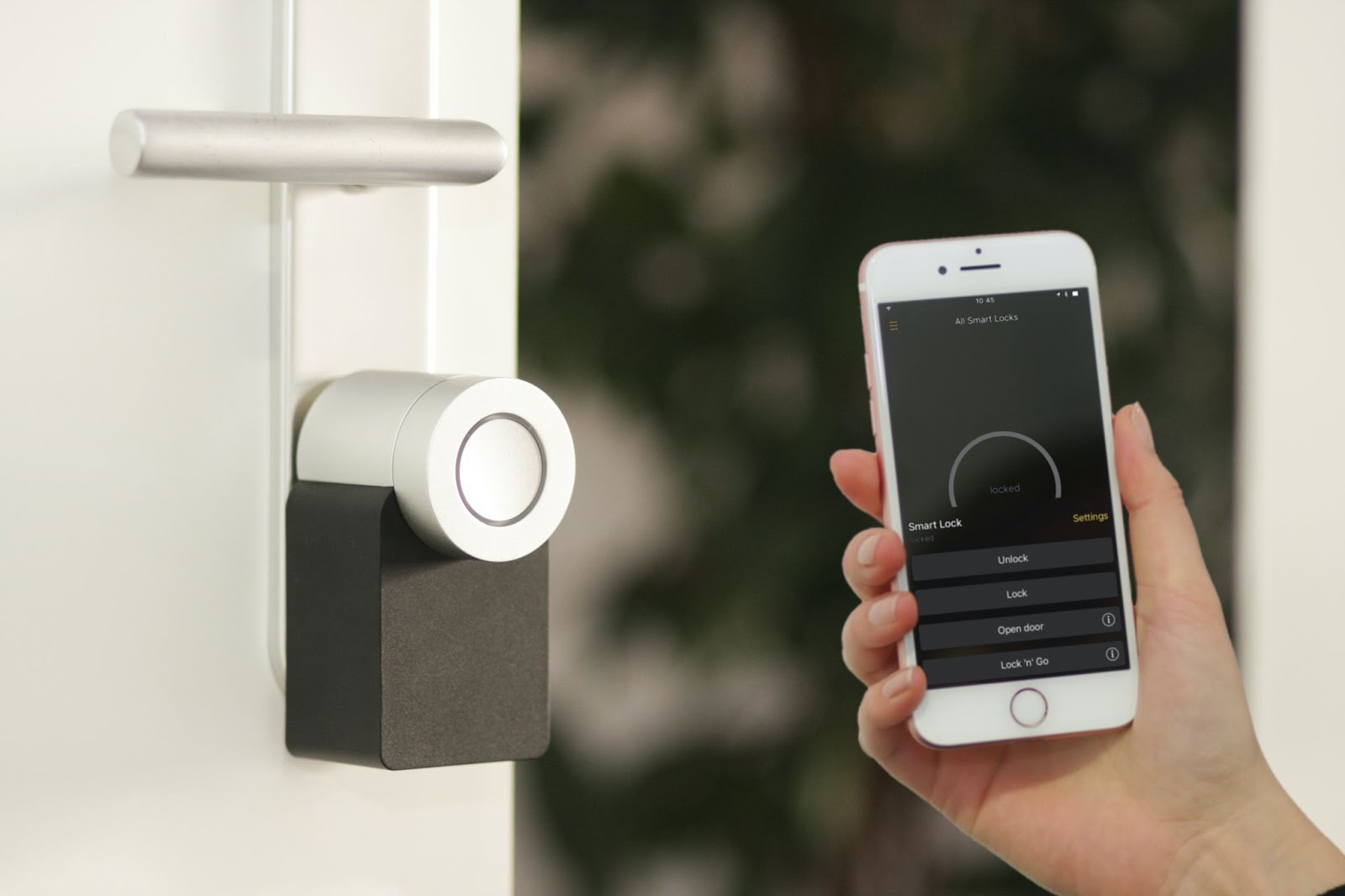
Photo by Sebastian Scholz (Nuki) on Unsplash
Mobile Technology at the Center of Security
Whether you simply need to access an area, reserve a meeting space, or organize a client’s appointment, future mobile-centered security systems will allow you to do just that and manage all of it from your smartphone or mobile device.


