


by Uzair Nazeer

With today’s technological developments, the number of smart devices is constantly increasing, and as a result, the size of the data produced grows exponentially. This situation has forced companies and organizations to keep up with the rapid digital transformation to survive. Many companies that are adapting most successfully are doing so by planning their next moves using data-oriented decisions.
As mentioned above, the massive rise in the amount of data produced daily comes with massive problems for the organizations handling it. Companies need to be able to store, handle, and analyze these vast quantities of data to be able to gain any insights from them. This means every organization needs to invest in ways to insert consistent and clean data into their systems to get healthy feedback about their critical decisions from this data ecosystem.
In data analytics literature, monitoring this flow that goes from ingesting data to getting meaningful outputs is called data lifecycle management. In this article, we will explain some best practices for improving the efficiency of this data management.
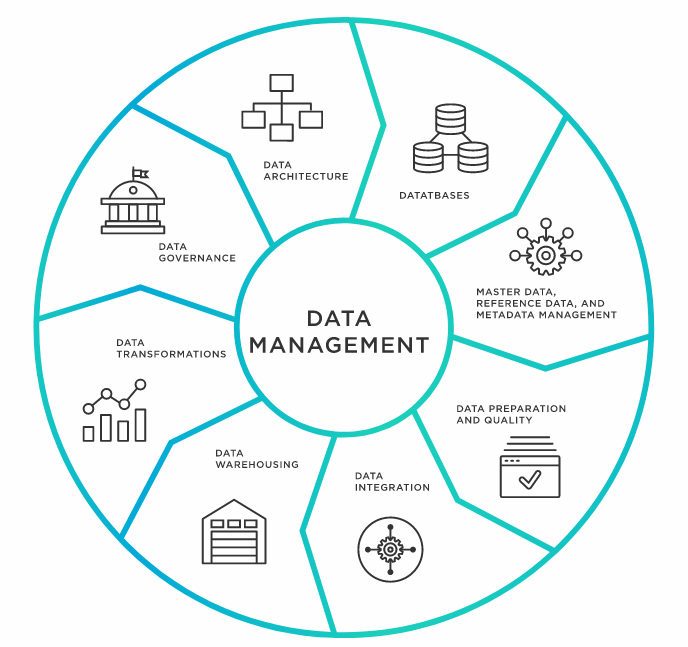
The Importance of Data Management
In data analytics or machine learning projects, there are generally two main parts that cover all the steps: the management of data and the machine learning model/ visualization of data for business output. Teams should focus more on the former, even though the latter is much more popular. The reason for this is simple. All your work can be meaningless from a business perspective if it is not backed up by sound data engineering.
In real-life use cases, data can flow from a variety of sources, such as API or user events in different types, time zones, formats, etc. This diversity increases the chance of facing incorrect, messy, or inconsistent data. In this situation, data organizations should build robust data management systems that can fix all these bugs and clean raw data ingested from sources with automated pipelines. This kind of architecture is able to save teams time and can easily be integrated with all other data resources or business outputs for feeding machine learning models or visualizations.
The Advantages of Quality Data Management
In your organization, the most crucial advantages of a quality data management system are that you save time by minimizing extra development tasks and avoid making wrong business decisions. The latter is particularly important because business teams can get incorrect feedback using inconsistent data if the data management lifecycle is not good. This problem may result in a major loss for your organization.
In addition to these, organizations can gain important hands-on experience in building complex architectures. Thanks to this experience, they can easily integrate best practices into other potential products. As a result of this, the development of a data management system can be faster, more seamless, and more efficient.
Some Best Practices for Efficient Data Management
In this section, there will be some best practices with examples from real-life projects about how we can increase the efficiency of the data management ecosystem.

Build Data Warehouse Structure
As mentioned in the introduction phase, the size of the generated data in the world is increasing too fast. Therefore, there should be alternative solutions to store the raw data before the processing phase. At this moment, data warehouse technology can save most of the time of data teams by ensuring the consistency and security of the acquired data. They can also serve you both in machine learning and business intelligence projects with large amounts of historical data that can be fetched easily by analytical queries.
Use Analytical Database
Ingesting raw data from sources into the data warehouse ecosystem is generally not clean. However, using big data solutions requires you to insert processed data into the analytical databases after transformation operations because data warehouse systems are not fast enough and not optimized for data analyzing or data querying. The main benefit of using analytical databases is that organizations can have the final data for reporting or machine learning projects after inserting transformed raw data into another database.
Automate with Orchestration Tools
In modern data architectures, transforming raw data into aggregated data is one of the main processes in daily routine. This routine is also called the ETL (extract-transform-load) process. Data organizations should use data orchestration tools to automate these ETL pipelines. This method enables them to prevent repetition and save time. Additionally, it helps you ensure consistency and remove possible bugs by allowing you to monitor all pipelines from the orchestration tool.
Monitor System with Alert Notifications
To ensure that every task in data management runs seamlessly, there should be a robust monitoring and debugging structure that can immediately alert data organizations with internal notifications. Otherwise, any failure or error in the data pipelines can negatively affect project outcomes, which may mislead business decisions.
For example, let’s say your data team developed a customer-specific campaign project for the marketing domain. In this scenario, marketing raw data should be ingested into the data warehouse and then inserted into the analytical database after ETL processes. This will allow you to provide meaningful insights to business teams by analyzing core marketing KPIs. Next, you can automate this data analysis process and build a monitoring system for feeding the machine learning models with consistent data to produce healthy outputs in the prediction phase.
Conclusion
As the world continues to witness one digital transformation after another, companies continue making data reforms to compete in the market. The best practices mentioned above can handle many of the problems companies face when trying to adapt.
I hope you found this article informative and that it helped you decide which approaches you can apply to increase the efficiency of your data management system.


