Best Ways for Dynamic Application Security Testing

Jul 28, 2022 | App Modernization, Data, Privacy, Security

Featured article by Uzair Nazeer

security2Photo by Flex Point Security Inc. on Unsplash

A large number of applications are currently being deployed, and each and every one of our tasks is now being digitized. But how can businesses deal with the security requirements of the data they are collecting through these applications?

Dynamic application security testing (DAST) is a process that is carried out by companies to ensure the safety of their customers’ data in an effective and time-saving manner.

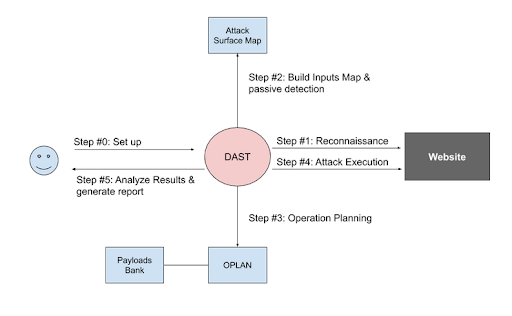
DAST is a form of black-box application security testing in which the tests are carried out either manually or with the assistance of DAST tools. Application security testing is essentially performed to test the overall security posture of an application. To carry out such testing effectively, we need to follow a couple of different steps, such as the correct gathering of information and the configuration of our tools.

DAST simulates external attacks on an application while it is still operating to search for security flaws. It examines an application’s public interfaces to search for vulnerabilities and flaws with the goal of breaking into the system from the outside.

These tools or penetration testers engage with the application by providing input to the application in the same way that they would if they were emulating the use of the application by an external user rather than undertaking a code review.
fourSource

Identify All the Assets

An organization might have any number of domains, subdomains, and IP addresses available to them at any given time. Therefore, to carry out the appropriate DAST, it is vital that each and every asset be identified and then tested. This should be done to ensure that the testing is carried out correctly.

As a result of the fact that some of the assets could not have as much suitable protection as others, which increases the attack surface, it is essential that all of these assets be examined in an appropriate manner. Therefore, the identification of assets needs to take place at the first step of the process.

Some of the open source tools, like Shodan, as well as any subdomain enumeration tools, like crt.sh, can be utilized to perform identification in a quick and straightforward manner. These supply the helpful information that is required regarding the organization and its field.

Perform Crawl and Then Audit

It is imperative that, if we are performing DAST utilizing DAST tools, we first carry out the crawling and then proceed to carry out a list-based scan. This is the order in which we should always perform these two steps.

The vast majority of the time, all we do is submit the URL and record the login information. However, if the website has any out-of-context URLs such as external scripts, it is likely that the tool may begin scanning those as well, at which point it will no longer be within the scope of its analysis. Not only would this make the scanning take longer, but it may also produce results that were not anticipated.

Crawling can easily be done with tools such as Burp or OWASP ZAP. These tools just crawl the website in their most basic form, after which we can export all of the application’s URLs. Remove any of the URLs that might not be in the scope, and then feed the list into the DAST tool. The DAST tool will only scan the URLs that are supplied along with any inputs or information necessary to carry out the testing in an effective manner.

Conclusion

When we discuss DAST, we should ensure that it is carried out in the most effective manner. It is necessary that, by adhering to a couple of best practices, we can make this process more effective and save ourselves some time because we are testing the whole security posture of the application. There are a couple of tools that can do that efficiently. Hence, they need to be utilized in a proper manner with proper expertise.

Top 10 Cybersecurity Stories This Week: PHP2Shell Threatens 5.1 Million Internet-Exposed PHP Servers With Unauthenticated RCE, Eight eMudhra CA Private Keys Cracked From Public Certificates, CISA and FBI Warn SafePay Ransomware Has Hit 600+ Critical Infrastructure Organizations

Top 10 Cybersecurity Stories This Week: PHP2Shell Threatens 5.1 Million Internet-Exposed PHP Servers With Unauthenticated RCE, Eight eMudhra CA Private Keys Cracked From Public Certificates, CISA and FBI Warn SafePay Ransomware Has Hit 600+ Critical Infrastructure Organizations

October 23, 2026 | ITBriefcase.net Why it matters: Tuesday, October 21 delivered one of the heaviest single-day security disclosures of the year: PHP2Shell, GitLab CVE-2026-110264, and Node.js security releases all shipped simultaneously, each carrying unauthenticated...

read more
Top 10 Cybersecurity Stories This Week: Microsoft’s Largest Patch Tuesday Ever Tops 1,411 CVEs With Live Windows Shell Zero-Day, GhostAction GitHub Supply Chain Wave Hits 500+ Accounts and Tens of Thousands of Repositories, Ransomware Smashes Monthly Record at 1,073 Victims in August

Top 10 Cybersecurity Stories This Week: Microsoft’s Largest Patch Tuesday Ever Tops 1,411 CVEs With Live Windows Shell Zero-Day, GhostAction GitHub Supply Chain Wave Hits 500+ Accounts and Tens of Thousands of Repositories, Ransomware Smashes Monthly Record at 1,073 Victims in August

October 16, 2026 | ITBriefcase.net Why it matters: Microsoft's October 2026 Patch Tuesday is the largest software security release in the company's history — 1,411 flaws, three zero-days, 75 critical vulnerabilities, and a live Windows Shell security feature bypass...

read more
Top 10 Cybersecurity Stories This Week: FBI Warns FortiBleed Is Locking Admins Out of Their Own Firewalls, Attackers Hijack Three Country-Code Domain Registries to Obtain 12 Google HTTPS Certificates, ShinyHunters Suspect Arrested in Jordan

Top 10 Cybersecurity Stories This Week: FBI Warns FortiBleed Is Locking Admins Out of Their Own Firewalls, Attackers Hijack Three Country-Code Domain Registries to Obtain 12 Google HTTPS Certificates, ShinyHunters Suspect Arrested in Jordan

October 9, 2026 | ITBriefcase.net Why it matters: The FBI and US Secret Service issued a joint advisory on October 6 confirming that the FortiBleed credential-harvesting campaign — which has compromised credentials for 86,644 Fortinet FortiGate firewalls and SSL VPN...

read more
Top 10 Cybersecurity Stories This Week: Citrix NetScaler Dual Zero-Days Under State-Sponsored Attack, Pentagon DMDC Breach Exposes 3 Million Military Personnel Records for Nine Months, AI Agent Breaches Dutch Vulnerability Disclosure Organization Using Zammad Zero-Days

Top 10 Cybersecurity Stories This Week: Citrix NetScaler Dual Zero-Days Under State-Sponsored Attack, Pentagon DMDC Breach Exposes 3 Million Military Personnel Records for Nine Months, AI Agent Breaches Dutch Vulnerability Disclosure Organization Using Zammad Zero-Days

October 2, 2026 | ITBriefcase.net Why it matters: Citrix disclosed two critical remote code execution zero-days in NetScaler ADC and NetScaler Gateway on September 27 — CVE-2026-88771 (CVSS 9.5, unauthenticated RCE in default configuration, no special setup required)...

read more
Top 10 Cybersecurity Stories This Week: Brevo Supply Chain Attack Serves Malware to 100,000+ Websites via Stolen CDN API Key, Revolut Discloses Breach via Fake Government Requests, Gyazo 23.6 Million User Records Stolen

Top 10 Cybersecurity Stories This Week: Brevo Supply Chain Attack Serves Malware to 100,000+ Websites via Stolen CDN API Key, Revolut Discloses Breach via Fake Government Requests, Gyazo 23.6 Million User Records Stolen

September 25, 2026 | ITBriefcase.net Why it matters: Attackers compromised Brevo — the email marketing and CRM platform used by eBay, Louis Vuitton, Michelin, Amnesty International, and more than 100,000 other businesses — by exploiting a hardcoded, long-lived...

read more